
People 交流 · Stop P01
自己紹介
Introducing yourself in Japanese
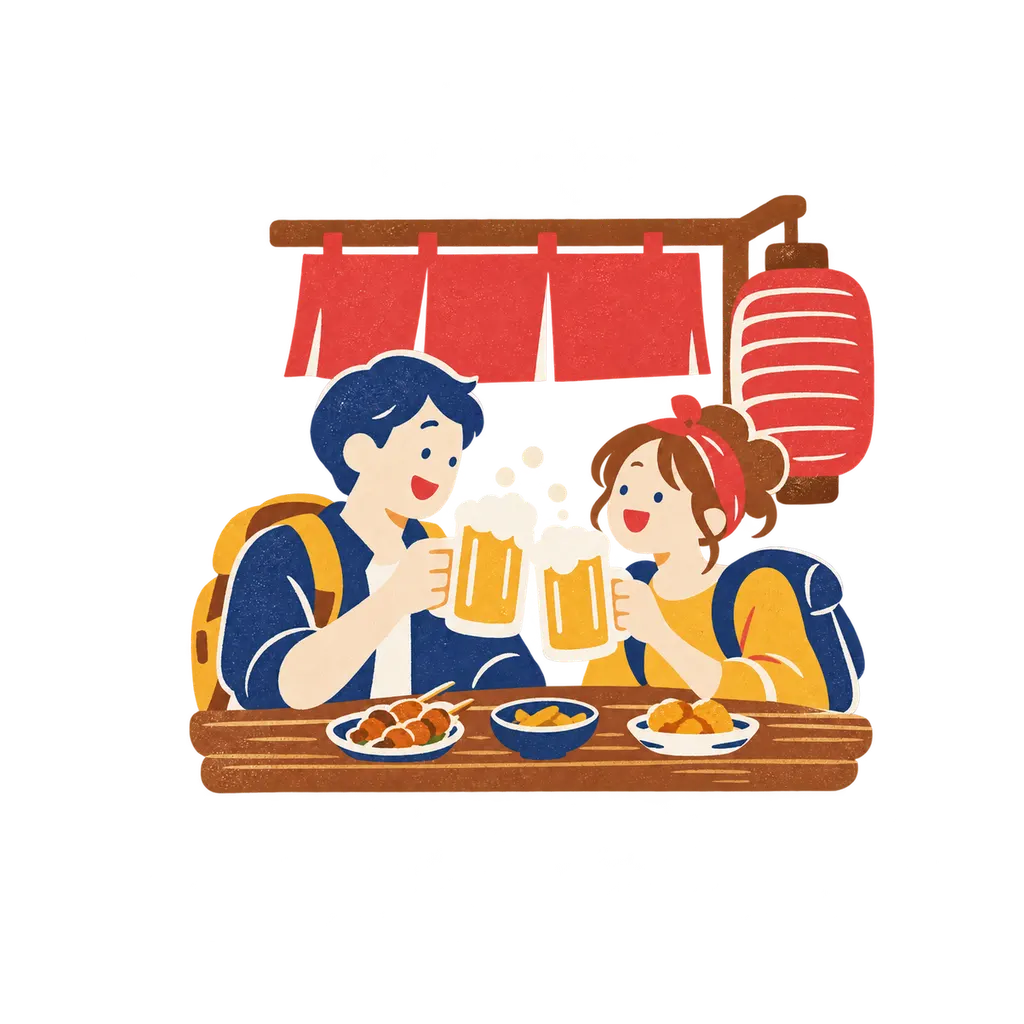
Evening at a yatai food stall by the river in Nakasu, Fukuoka. The person on the next stool turns to say hi. Say where you're from, give your name, and say why you're in Japan.
Phrases
アメリカから来ました
アメリカからきました
Amerika kara kimashita
I'm from the US.
Swap in your country: イギリス (UK), カナダ (Canada), オーストラリア (Australia).
エマです
Ema desu
I'm Emma.
Swap in your own name. No need for わたしは (I): Japanese usually leaves it out.
日本は初めてです
にほんははじめてです
Nihon wa hajimete desu
It's my first time in Japan.
Expect a big smile and a question about what you've eaten so far.
旅行で来ました
りょこうできました
ryokou de kimashita
I'm here on holiday.
Here on business? Say 仕事で来ました (shigoto de kimashita).
よろしくお願いします
よろしくおねがいします
yoroshiku onegaishimasu
Nice to meet you.
Say it right after your name, with a small nod.
日本語を勉強しています
にほんごをべんきょうしています
nihongo o benkyou shite imasu
I'm learning Japanese.
A great conversation starter. People will often slow down to help you.
What you’ll hear
Staff talk fast. Here’s what they are likely to say at this stop, and a good answer.
どこから来たんですか?
doko kara kita n desu ka?
Where are you from?
The classic first question from friendly locals.
アメリカから来ました
Amerika kara kimashita
I'm from the US.
日本語、上手ですね!
nihongo, jouzu desu ne!
Your Japanese is really good!
You'll hear this after even one word. A modest reply is the classic answer.
いえいえ、まだまだです
ie ie, mada mada desu
Oh no, I've got a long way to go.
お名前は?
onamae wa?
What's your name?
A short, friendly way to ask your name.
エマです
Ema desu
I'm Emma.
Culture tip
Names and さん
Add さん (san) after other people's names, like Daiki-san, but never after your own. Many Japanese introduce themselves by their family name, so use the name they give you, plus さん.
“You add さん to other people's names, but never to your own.”
Call him Daiki-san, but introduce yourself with just エマです.
Practise scene
Friends at the Yatai
A yatai (open-air food stall) in Nakasu, Fukuoka. You squeeze onto a stool next to a friendly local.
Daiki · Local at the next stool
-
こんばんは!どこから来たんですか?
konbanwa! doko kara kita n desu ka?
Good evening! Where are you from?
-
Your turn: Tell him you're from the US.
アメリカから来ました
Amerika kara kimashita
I'm from the US.
-
へえ、アメリカ!日本は初めてですか?
hee, Amerika! Nihon wa hajimete desu ka?
Oh, America! Is this your first time in Japan?
-
Your turn: It's your first trip to Japan. Tell him.
はい、日本は初めてです
hai, Nihon wa hajimete desu
Yes, it's my first time in Japan.
-
そうなんですね!僕はダイキです。お名前は?
sou nan desu ne! boku wa Daiki desu. onamae wa?
Oh, I see! I'm Daiki. What's your name?
-
Your turn: Tell him your name (Emma) and that it's nice to meet him.
エマです。よろしくお願いします
Ema desu. yoroshiku onegaishimasu
I'm Emma. Nice to meet you.
-
エマさん、よろしく!福岡、楽しんでね。
Ema-san, yoroshiku! Fukuoka, tanoshinde ne.
Nice to meet you, Emma! Enjoy Fukuoka.
Scene complete! You earned the Nakasu, Fukuoka stamp.
Phrases from Ekiben content v3